Dino Monster: City Rush
- 4.5
- Rating
- 1.00M
- Installs
- Free
- Price
 Analysis by App-foxy
Dino Monster: City Rush is an action game built around a simple, appealing idea: move a dinosaur through a city, keep your momentum, and react quickly as the skyline turns into an obstacle course. I found it easy to understand within moments, but not quite as effortless to play well. The gap between knowing what to do and doing it smoothly is where most of the experience lives.
Developed by NitroTech Studio, the game is free and aimed at Everyone. Its store summary presents it as a city-saving dash involving gliding, climbing, and fast movement, while the short description keeps things deliberately brief with “Dino Monster.” That contrast tells you a lot about the game’s appeal: it is visually easy to grasp, but you need to spend time playing before you can judge whether its movement feels satisfying enough for repeated sessions.
What makes the first few sessions enjoyable
I like games that let me start playing without a long explanation, and this one fits that preference. The central fantasy is immediately readable. You are a giant creature moving through an urban setting, and the basic goal is to stay active rather than pause to manage a complicated menu of systems. That makes it suitable for a quick break, especially when I want something more interactive than a passive screen but less demanding than a long story-driven game.
You May Also Like

 Blood Strike: 2.5 Anniversary
Blood Strike’s Loadouts Turn Every Drop Into a Tactical Gamble
A close look at Blood Strike’s custom loadouts: how fast access to signature weapons reshapes its battle royale rhythm, rewards preparation, and narrows the gap between fights.

 Pandora - Music & Podcasts
Pandora’s Music Is Easy to Start, but Harder to Recover
Pandora’s strength is its low-effort path from a seed to a station. Its weak spot is how much confidence it asks you to place in connection, setup, and quiet recovery.

 8 Ball Pool
 Is Built on Rivalries, Rematches, and Routine
A close look at the rivalries, rematches, shared routines, and unanswered safety questions that turn a quick pool match into a persistent mobile community.

 Samsung Music
’s Quiet Strength Is Playing What You Already Own
Its reach comes less from spectacle than from dependable access to a personal library. That simplicity is both the app’s strongest retention engine and its ceiling.

 AccuWeather: Weather Radar
AccuWeather Review: A Quick, Clear Forecast for Everyday Decisions
For everyday plans, the best forecast is the one you can understand quickly. AccuWeather makes rain timing, radar, and local conditions easy to act on, with a few trade-offs.

 Hill Climb Racing
Why Hill Climb Racing Still Turns Crashes Into One More Run
A tiny car, a bumpy hill and one more upgrade: Hill Climb Racing keeps resurfacing because its simple chaos makes every near-miss feel personal.
More From Our News Desk
View All News


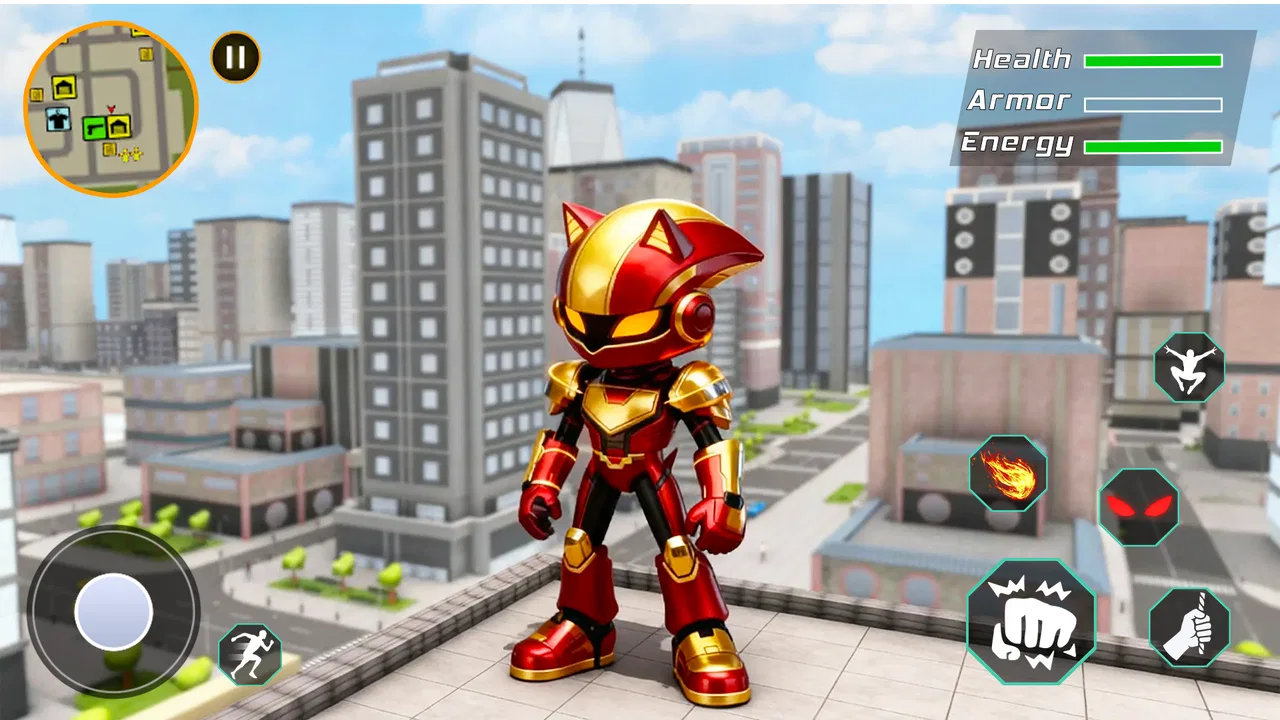
The city setting also gives the action a clearer identity than a plain runner with anonymous platforms. Buildings and skyline movement make the route feel like a place rather than a sequence of disconnected challenges. Even when the action is straightforward, the idea of navigating above street level gives each jump or change of direction a little more personality.
Still, I would not approach it expecting a deep action adventure. The strongest part is the immediate movement fantasy, not a large amount of narrative or strategic planning. If you enjoy learning a compact control scheme and improving your reactions, the game has a reasonable chance of holding your attention. If you need extensive character development, exploration, or a broad collection of long-term systems, a larger action title will probably suit you better.
Where players are most likely to get stuck
The first friction point is usually not understanding the objective. It is judging timing. A skyline route can look open while still requiring a precise movement decision, and a player who reacts only when an obstacle is already close may feel that the game is unfair. I found it more useful to watch the next section of the route than to focus only on the dinosaur’s current position.
That small change in attention makes a practical difference. Instead of asking, “What do I press right now?” I try to read the next safe landing or the next vertical change before committing. This is especially helpful when several visual elements compete for attention. The monster is the obvious focus, but the space ahead is where the important information is.
Another common sticking point is treating every mistake as a control problem. Sometimes the input is late; other times the chosen path was already too ambitious. Separating those two situations helps. If the same maneuver fails even when I begin it earlier, the issue is probably route selection or timing rather than a need to press harder or faster.
Players who normally prefer turn-based action may need a short adjustment period. The game rewards anticipation, and that can feel less comfortable than choosing actions from a menu. On the other hand, people who enjoy compact arcade challenges may appreciate that the feedback is immediate. The game does not need a complicated explanation to make a failed attempt understandable: I can usually tell whether I moved too late, aimed poorly, or committed to a risky line.
Simple setup checks before blaming the game
Because this is a mobile action game, the quality of the first session depends heavily on the phone’s basic condition. Before deciding that the controls are unreliable, I would close other demanding apps, make sure the device is not already hot, and play with a clean screen. Those steps sound ordinary, but a warm phone, crowded memory, or a finger sliding across a dirty display can make quick movement feel inconsistent.
I also recommend checking the operating-system requirement before installing. The game supports Android 7.0 and later, so an older device may not be a suitable starting point. Meeting the minimum requirement does not automatically mean every phone will feel equally comfortable, though. A smaller display can make visual reading harder, while an older device may introduce enough delay to affect timing even when the game opens normally.
Storage is another sensible check. A device that is nearly full can behave unpredictably when installing or updating games. I would leave some free space, install the current release, and restart the phone if the installation appears incomplete. The current version is 1.1.1, so checking that the installed build matches the latest available version is a useful first step when something behaves differently from expected.
For a child using the game, the Everyone content rating makes it an approachable choice from an age-classification perspective. I would still supervise the first session, not because the rating suggests mature material, but because a younger player may interpret repeated failures as a technical problem. Showing how to observe the route and retry calmly is more useful than simply taking over the controls.
A reliable way to recover after a rough session
My preferred recovery method is to reduce the goal. Rather than trying to reach a distant point immediately, I concentrate on one movement at a time: identify the next opening, choose a conservative line, and watch what happens. This turns a frustrating attempt into a short practice loop. It also reveals whether I am failing because of speed, direction, or poor visibility.
When a run goes wrong repeatedly, I avoid changing several things at once. If I alter my timing, route, and grip together, I learn nothing from the next attempt. I change one variable first. For example, I begin the movement earlier while keeping the same route. If that helps, timing was the likely issue. If it does not, I try a safer path instead.
This approach is particularly valuable for players using a phone one-handed. A thumb can cover part of the screen, and the natural grip may make some movements less precise. I get better results by holding the phone securely, keeping the active viewing area clear, and avoiding frantic corrections. The game’s fast style encourages panic, but panic usually produces the least useful input.
If the game stops responding after an interruption, I would first return to it normally, then close and reopen it if the controls remain unresponsive. A device restart is a reasonable next step when other apps are also acting strangely. I would not immediately reinstall after a single failed session, because that can create more inconvenience without identifying the cause. Basic recovery should be gradual: resume, reopen, restart, and only then consider a fresh installation.
When the problem is probably outside the game
Not every stutter, missed touch, or failed installation points to Dino Monster: City Rush itself. If other games also feel delayed, the phone may be under load. If only touches near one edge of the display fail, the screen or case may be interfering. If performance changes noticeably as the device warms up, temperature is a more plausible explanation than the game suddenly changing its controls.
Network conditions can also confuse troubleshooting, even though the core appeal is the moment-to-moment action. An interrupted connection may affect installation, updating, or other connected parts of the experience, but it does not make every movement mistake a network issue. I would test the game after the installation has completed and avoid diagnosing connection problems from a single missed maneuver.
Notifications and gesture controls are easy to overlook. A message banner, an accidental edge swipe, or a navigation gesture can interrupt concentration at exactly the wrong moment. For a serious attempt, I prefer a quiet session with fewer interruptions. This is not a special setting I am claiming the game provides; it is simply a practical way to remove outside variables from a timing-based game.
Screen orientation and grip can matter as well. If the display shifts or the phone rotates unexpectedly, the interruption may come from the device rather than the game. A stable position, a clean touch surface, and enough room for the fingers to rest naturally are small preparation steps, but they matter more in an action title than in a puzzle played at a relaxed pace.
How I fit it into an ordinary day
A realistic use case is a short break between tasks. I can open the game, make a few attempts, and stop without needing to remember a complicated plot or rebuild a large strategy. That makes it a better match for spare moments than an action role-playing game that expects a long uninterrupted session. The city-running concept gives the break a clear purpose, while the compact format keeps the entry cost low.
It also works as a reaction-training habit, although I would use that phrase modestly. I am not treating it as a formal training tool. What it does offer is repeated practice in reading movement, anticipating space, and correcting mistakes. Those skills are useful inside the game, and the immediate feedback makes improvement easy to notice from one attempt to the next.
For families, the free price removes the need to pay before deciding whether the basic style is enjoyable. That is useful when several people want to try it on the same device. I would still check the device’s normal purchase and download controls separately, because a free game does not automatically answer every question about how a particular phone is configured.
The game has also attracted a sizeable audience, with over one million installs and an average rating of 4.5 from around one thousand three hundred ratings. I see that as a helpful sign that the central idea connects with many players, but not as a guarantee that it will suit everyone. Ratings are a starting point; the real decision depends on whether you enjoy quick movement and repeated attempts.
Where it sits beside other action games
Compared with a traditional platform game, this title feels more focused on immediate traversal than on exploration. A platformer may give you time to inspect a level, search for secrets, or plan a route at your own pace. Here, the skyline framing encourages forward attention and quick decisions. That is a strength when I want momentum, but a weakness when I want to wander or solve environmental problems slowly.
Compared with a large action game, it is much easier to pick up. There is less mental overhead before the first meaningful attempt, and the dinosaur-in-the-city premise does much of the explanatory work. The trade-off is depth. A bigger game may offer more varied objectives, progression layers, or combat choices, while this experience is more dependent on whether its movement loop remains enjoyable after the novelty fades.
It also differs from relaxed casual games because failure is more closely tied to timing. Someone looking for a calm activity with little pressure may prefer a match-three game, a word game, or a slower puzzle. Someone who likes restarting quickly and learning from a mistake may find the action more rewarding. I would choose this one for energy and immediacy, not for a peaceful, low-attention session.
Who should try it, and who should skip it
I would recommend it to players who like city settings, oversized creatures, and short action sessions. It is especially suitable for someone who wants a game that can be understood quickly but still asks for better timing after the first few tries. The free entry point makes experimentation easy, and the Everyone rating broadens its appeal for households seeking a straightforward action game.
I would be more cautious about recommending it to players who dislike repetition. A movement-focused game naturally asks you to retry situations, and the satisfaction comes from gradually reading them better. If repeating a route feels tedious rather than motivating, the central loop may become tiring quickly. The same applies to players who need a deep story or a large variety of systems to stay engaged.
People with older phones should also set realistic expectations. Android 7.0 is the minimum operating-system requirement, but comfort depends on the whole device, including its display, responsiveness, and available resources. If a phone already struggles with other action games, I would test this one briefly rather than assuming the minimum version guarantees a smooth experience.
My practical verdict after spending time with it
Dino Monster: City Rush succeeds when I treat it as a focused arcade-action game rather than a complete city adventure. Its best quality is the clarity of its premise: guide a powerful creature through a vertical urban route, make quick decisions, and improve by paying closer attention to what is ahead. That is enough to make short sessions enjoyable, especially when I want something active without a heavy commitment.
Its limitations are tied to the same simplicity. Players looking for extensive progression, a detailed story, or broad strategic choice may find the experience narrow. Some frustration can also come from setup conditions, grip, screen visibility, or device performance rather than from the game’s design alone. Taking a few minutes to stabilize the phone and changing one movement habit at a time makes the evaluation fairer.
NitroTech Studio’s action game is free, currently at version 1.1.1, and available for devices running Android 7.0 or later. Released on November 20, 2025, it has already built a notable audience, but I would still judge it by the feel of its movement rather than its reach. The key question is simple: do you enjoy learning a fast skyline route through repeated attempts? If yes, this is an easy game to try and a credible choice for short action breaks. If you want a slower, deeper, or more story-rich alternative, I would look elsewhere rather than expecting this compact dinosaur dash to become something it is not.
FAQs for Dino Monster: City Rush
01What is the main objective of Dino Monster: City Rush?
The main objective of Dino Monster: City Rush is to navigate through a bustling city as a ferocious dinosaur, causing as much destruction as possible while avoiding obstacles. Players must complete missions, unlock new dinosaurs, and upgrade abilities to maximize chaos and achieve high scores.
02Is Dino Monster: City Rush suitable for all ages?
Dino Monster: City Rush is designed for players aged 12 and up due to its mild cartoon violence. The game involves destruction and chaos, which might not be suitable for younger audiences. Parents should review the game content to ensure it aligns with their expectations for their children.
03Does Dino Monster: City Rush require an internet connection to play?
Dino Monster: City Rush can be played offline, allowing players to enjoy the game without an active internet connection. However, an internet connection is required for certain features, such as in-app purchases, leaderboard updates, and accessing new content or updates.
04What are the in-app purchases available in Dino Monster: City Rush?
Dino Monster: City Rush offers various in-app purchases, including exclusive dinosaurs, power-ups, and currency packs. These purchases enhance gameplay by unlocking additional features and upgrades. While the game is free to play, spending real money can provide a more enriched experience with faster progress.
05How can I improve my skills and score in Dino Monster: City Rush?
To improve in Dino Monster: City Rush, focus on mastering each dinosaur's unique abilities and strategies. Completing missions efficiently, collecting power-ups, and upgrading dinosaurs can significantly boost your score. Observing patterns in the game's environment can also help in avoiding obstacles and maximizing destruction.
Pros
- Engaging graphics and sound effects.
- Intuitive controls for all ages.
- Variety of dinosaurs to unlock.
- Regular updates with new levels.
- Offline play mode available.
Cons
- In-app purchases can be pricey.
- Ads can interrupt gameplay.
- Some levels feel repetitive.
- Requires frequent internet checks.
- Limited customization options.

Dino Monster: City Rush
Gallery